Dangerous Goods Training – CBTA Courses by Job Function
IATA DGR job functions 7.1 to 7.10
Dangerous goods courses by job function
Each course is built for one well-defined job function and exists in an initial and a recurrent version. Trainees are trained on real documents, labels and packages and assessed on the tasks of their job. Select a course to see the full details.
IATA-certified CBTA Center · functions 7.3–7.10IATA DGR job function 7.1.A
Classifying dangerous goods
DGR Training for Personnel Responsible for Classifying Dangerous Goods
Coming soonWho attends
Classification staff of shippers and freight forwarders.
Typical clients
Shippers in industry, oil and gas, pharmaceuticals and laboratories; freight forwarders.
Entry requirements
- Initial: staff assigned to the function — no prior dangerous goods training needed.
- Recurrent: holder of a certificate for the same function, less than 24 months old.
Training and assessment
Hands-on training on real documents, labels and packages. Trainees are observed performing the core tasks of the function, then sit a written final exam with the Regulations open. Pass mark: 80%.
Included
Instruction, the Student Book, practical material and all assessments. Each trainee has a current copy of the IATA DGR during the course. Full days, 09:00 to 17:30.
IATA DGR job function 7.1.B
Preparing dangerous goods shipments
DGR Training for Personnel Responsible for Preparing Dangerous Goods Shipments
Coming soonWho attends
Staff who prepare, pack, mark, label and document consignments.
Typical clients
Shippers, packers, freight forwarders, CCAA inspectors.
Entry requirements
- Initial: staff assigned to the function — no prior dangerous goods training needed.
- Recurrent: holder of a certificate for the same function, less than 24 months old.
Training and assessment
Hands-on training on real documents, labels and packages. Trainees are observed performing the core tasks of the function, then sit a written final exam with the Regulations open. Pass mark: 80%.
Included
Instruction, the Student Book, practical material and all assessments. Each trainee has a current copy of the IATA DGR during the course. Full days, 09:00 to 17:30.
IATA DGR job function 7.2
General cargo acceptance
DGR Training for Personnel Responsible for Processing and Accepting Goods Presented as General Cargo
Coming soonWho attends
Cargo and mail acceptance staff.
Typical clients
Ground handling agents, airline cargo, postal operators.
Entry requirements
- Initial: staff assigned to the function — no prior dangerous goods training needed.
- Recurrent: holder of a certificate for the same function, less than 24 months old.
Training and assessment
Hands-on training on real documents, labels and packages. Trainees are observed performing the core tasks of the function, then sit a written final exam with the Regulations open. Pass mark: 80%.
Included
Instruction, the Student Book, practical material and all assessments. Copies of the IATA DGR are available in the room. Full days, 09:00 to 17:30.
IATA DGR job function 7.3
Dangerous goods acceptance
DGR Training for Personnel Responsible for Processing or Accepting Dangerous Goods Consignments
IATA CBTA certifiedWho attends
Dangerous goods acceptance staff and the export staff of freight forwarders.
Typical clients
Ground handling agents, airline cargo, freight forwarders, CCAA inspectors.
Course objective
At the end of the course, trainees will be able to process or accept dangerous goods consignments by verifying classification, packaging, marking, labelling and documentation, in accordance with the standards and best practices in force.
Entry requirements
- Initial: staff assigned to the function — no prior dangerous goods training needed.
- Recurrent: holder of a certificate for the same function, less than 24 months old.
Training and assessment
Hands-on training on real documents, labels and packages. Trainees are observed performing the core tasks of the function, then sit a written final exam with the Regulations open (2 h). Pass mark: 80%.
Included
Instruction, the Student Book, practical material and all assessments. Each trainee has a current copy of the IATA DGR during the course. Full days, 09:00 to 17:30.
IATA DGR job function 7.4
Cargo and ULD handling
DGR Training for Personnel Responsible for Handling Cargo in a Warehouse, Loading and Unloading ULDs and Loading and Unloading Aircraft Cargo Compartments
IATA CBTA certifiedWho attends
Warehouse, build-up, ramp and loading staff.
Typical clients
Ground handling agents, airlines, cargo terminal operators.
Course objective
At the end of the course, trainees will be able to handle, store, segregate, load and unload cargo containing dangerous goods safely and correctly, in accordance with the standards and best practices in force.
Entry requirements
- Initial: staff assigned to the function — no prior dangerous goods training needed.
- Recurrent: holder of a certificate for the same function, less than 24 months old.
Training and assessment
Hands-on training on real documents, labels and packages. Trainees are observed performing the core tasks of the function, then sit a written final exam with the Regulations open (1 h 30). Pass mark: 80%.
Included
Instruction, the Student Book, practical material and all assessments. Copies of the IATA DGR are available in the room. Full days, 09:00 to 17:30.
IATA DGR job function 7.5
Passenger and crew baggage
DGR Training for Personnel Responsible for Accepting Passenger and Crew Baggage, Managing Aircraft Boarding Areas and Other Functions Involving Direct Passenger Contact at an Airport
IATA CBTA certifiedWho attends
Check-in, ticketing, transfer and boarding gate staff.
Typical clients
Airlines and ground handling agents.
Course objective
At the end of the course, trainees will be able to identify dangerous goods carried by passengers and crew, recognise prohibited or restricted items, provide appropriate information and take the required action, in accordance with the standards and best practices in force.
Entry requirements
- Initial: staff assigned to the function — no prior dangerous goods training needed.
- Recurrent: holder of a certificate for the same function, less than 24 months old.
Training and assessment
Hands-on training on real documents, labels and packages. Trainees are observed performing the core tasks of the function, then sit a written final exam with the Regulations open (1 h 30). Pass mark: 80%.
Included
Instruction, the Student Book, practical material and all assessments. Copies of the IATA DGR are available in the room. Full days, 09:00 to 17:30.
IATA DGR job function 7.6
Load planning
DGR Training for Personnel Responsible for Planning of Aircraft Loading
IATA CBTA certifiedWho attends
Load controllers, load planners and weight-and-balance staff.
Typical clients
Airlines and ground handling agents.
Course objective
At the end of the course, trainees will be able to plan aircraft loading involving dangerous goods by applying the applicable requirements for loading restrictions, compatibility, segregation, positioning and communication of essential information, in accordance with the standards and best practices in force.
Entry requirements
- Initial: staff assigned to the function — no prior dangerous goods training needed.
- Recurrent: holder of a certificate for the same function, less than 24 months old.
Training and assessment
Hands-on training on real documents, labels and packages. Trainees are observed performing the core tasks of the function, then sit a written final exam with the Regulations open (1 h 30). Pass mark: 80%.
Included
Instruction, the Student Book, practical material and all assessments. Copies of the IATA DGR are available in the room. Full days, 09:00 to 17:30.
IATA DGR job function 7.7
Flight crew
DGR Training for Flight Crew
IATA CBTA certifiedWho attends
Pilots.
Typical clients
Airlines.
Course objective
At the end of the course, trainees will be able to recognise and respond appropriately to dangerous goods information and incidents, understand the operational risks associated with the carriage of dangerous goods, and apply the relevant normal and emergency procedures, in accordance with the standards and best practices in force.
Entry requirements
- Initial: staff assigned to the function — no prior dangerous goods training needed.
- Recurrent: holder of a certificate for the same function, less than 24 months old.
Training and assessment
Hands-on training on real documents, labels and packages. Trainees are observed performing the core tasks of the function, then sit a written final exam with the Regulations open (1 h 30). Pass mark: 80%.
Included
Instruction, the Student Book, practical material and all assessments. Copies of the IATA DGR are available in the room. Full days, 09:00 to 17:30.
IATA DGR job function 7.8
Flight operations officers and dispatchers
DGR Training for Flight Operations Officers and Flight Dispatchers
IATA CBTA certifiedWho attends
Flight operations officers, dispatchers and operations control staff.
Typical clients
Airlines.
Course objective
At the end of the course, trainees will be able to assess dangerous goods information relevant to flight operations, apply applicable operational restrictions, ensure that required information is communicated to the flight crew, and support safe flight planning and dispatch, in accordance with the standards and best practices in force.
Entry requirements
- Initial: staff assigned to the function — no prior dangerous goods training needed.
- Recurrent: holder of a certificate for the same function, less than 24 months old.
Training and assessment
Hands-on training on real documents, labels and packages. Trainees are observed performing the core tasks of the function, then sit a written final exam with the Regulations open (1 h 30). Pass mark: 80%.
Included
Instruction, the Student Book, practical material and all assessments. Copies of the IATA DGR are available in the room. Full days, 09:00 to 17:30.
IATA DGR job function 7.9
Cabin crew
DGR Training for Cabin Crew
IATA CBTA certifiedWho attends
Cabin crew.
Typical clients
Airlines.
Course objective
At the end of the course, trainees will be able to recognise dangerous goods incidents in the aircraft cabin, check passenger and crew baggage for dangerous goods that are not permitted, identify associated hazards, and apply the appropriate procedures to manage such incidents and protect passengers and crew, in accordance with the standards and best practices in force.
Entry requirements
- Initial: staff assigned to the function — no prior dangerous goods training needed.
- Recurrent: holder of a certificate for the same function, less than 24 months old.
Training and assessment
Hands-on training on real documents, labels and packages. Trainees are observed performing the core tasks of the function, then sit a written final exam with the Regulations open (1 h 30). Pass mark: 80%.
Included
Instruction, the Student Book, practical material and all assessments. Copies of the IATA DGR are available in the room. Full days, 09:00 to 17:30.
IATA DGR job function 7.10
Security screening
DGR Training for Personnel Responsible for the Screening of Passengers and Crew and their Baggage, Cargo and Mail
IATA CBTA certifiedWho attends
Screening officers and supervisors.
Typical clients
Airport screening companies, CCAA, airlines, ground handling agents.
Course objective
At the end of the course, trainees will be able to identify dangerous goods and prohibited items during screening activities, recognise potential non-compliance, and take appropriate action, in accordance with the standards and best practices in force.
Entry requirements
- Initial: staff assigned to the function — no prior dangerous goods training needed.
- Recurrent: holder of a certificate for the same function, less than 24 months old.
Training and assessment
Hands-on training on real documents, labels and packages. Trainees are observed performing the core tasks of the function, then sit a written final exam with the Regulations open (1 h 30). Pass mark: 80%.
Included
Instruction, the Student Book, practical material and all assessments. Copies of the IATA DGR are available in the room. Full days, 09:00 to 17:30.
About The Course
Dangerous goods training built on what your staff are actually expected to perform — and proven by assessing each key task.
AVIAIR Aviation Training Center (AATC), based in Yaoundé, Cameroon, provides Dangerous Goods Regulations (DGR) training for aviation personnel, delivered by an IATA-certified CBTA Center (Provider), functions 7.3–7.10. Our programmes address the IATA job functions 7.1 to 7.10, developing the knowledge, skills and attitudes required to perform assigned duties safely, efficiently and in accordance with the standards and best practices in force.
What is CBTA? The course starts from the tasks of your job, trains them to the level the job requires, and checks that you can actually perform them — by observing you, not only by a written test.
Trainees learn by doing: each course is an immersion in a realistic setting, where they handle real documents, labels and packages as they would at their workstation. Courses are delivered in our classrooms by IATA-qualified dangerous goods instructors, and can be adapted to each client’s procedures through a training needs analysis.
AATC is an IATA-certified CBTA Center (Provider) for functions 7.3 to 7.10 (certificate CBTA-PR-26-0091, valid until 6 November 2028). Courses 7.1.A, 7.1.B and 7.2 are coming soon.
Requirements
Initial course: staff assigned to the job function — no prior dangerous goods training needed
Recurrent course: holder of a certificate for the same function, less than 24 months old
Instruction in French or English; course materials are in English
Course Objectives
- Perform the dangerous goods tasks of your specific job function safely, correctly and consistently.
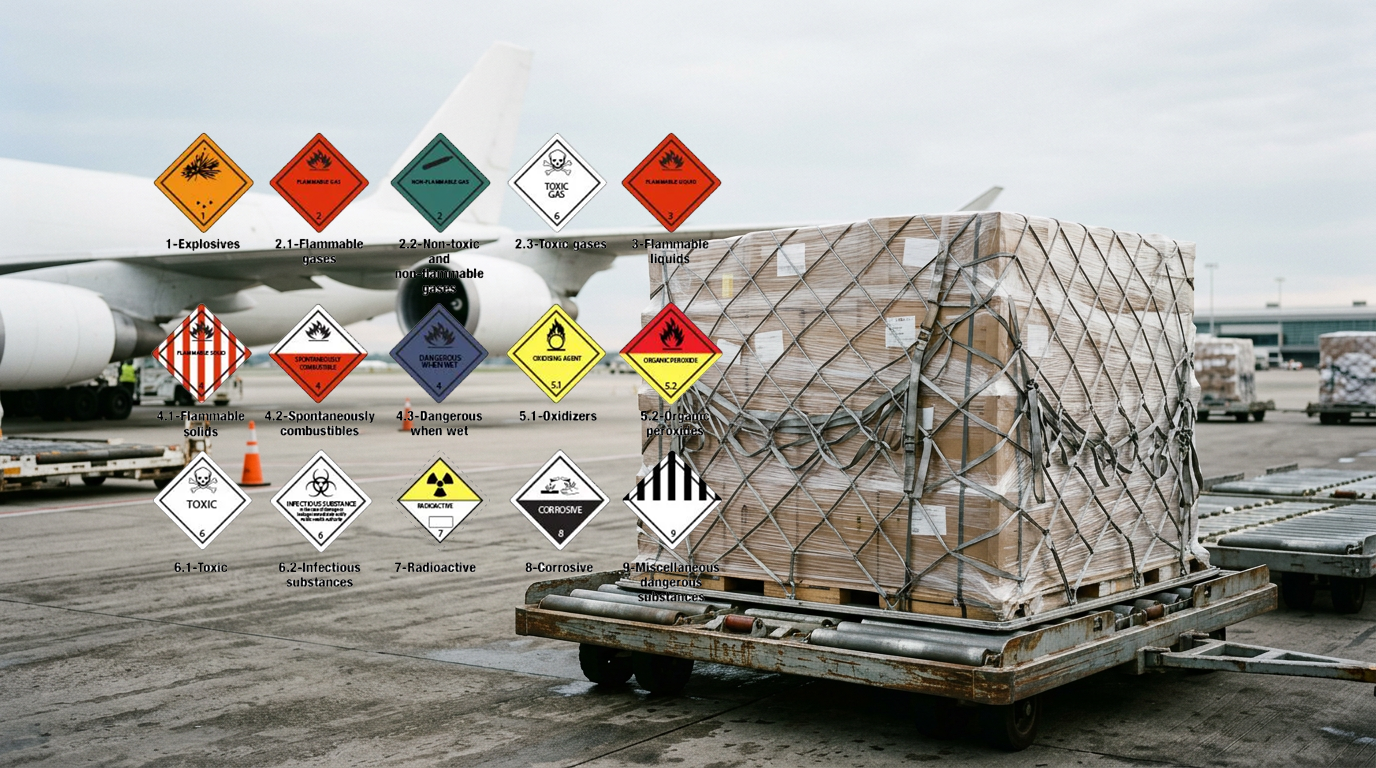
- Recognise dangerous goods, including hidden and undeclared dangerous goods, and take the required action.
- Apply the IATA Dangerous Goods Regulations to the real documents, labels, packages and situations of your role.
- Prevent errors and make risk-based decisions in line with the applicable requirements and your operator’s procedures.
- Respond correctly to dangerous goods incidents and emergencies.

Delivery format
- Classroom only, at AATC in Yaoundé, with an instructor — no e-learning or virtual classroom.
- Hands-on practice with real documents, labels and packages.
- Observed assessment of core tasks, then an open-book written exam (80% pass mark).
- Full days, 09:00 to 17:30. Groups of 12 to 15 trainees.
- Student Book, practical material and all assessments included.
- Client report per trainee and per session; training records kept at least 36 months.
- French
- English
- Materials in English
Course Language
- Initial: 1–5 days
- Recurrent: 1–3 days
Duration
Other Courses
The Crew Resource Management (CRM) course equips flight crew, maintenance personnel, and operations teams with the skills and awareness needed to ensure safe and efficient operations. It emphasizes teamwork, communication, decision-making, and the optimal use of all available human and technical resources to reduce errors, manage stress, and improve overall performance.
Crew resource management
About the Course
Requirements
Basic high school education
Designed for ATPL and CPL pilots, this course equips participants with the essential knowledge and skills to operate safely and efficiently in RVSM airspace, ensuring compliance with international standards and improving pilot employability.
RVSM
About the Course
Requirements
ATPL or CPL license
Intermediate English proficiency
This course combines theoretical instruction and practical flying training to equip pilots with the skills to prevent, recognize, and recover from aircraft upsets that exceed normal flight parameters. It strengthens pilot confidence, decision-making, and safety performance during unexpected situations.
Upset recovery
About the Course
Requirements
Aviation English Level 4
Professional pilots (ATP, CPL) — initial or recurrent
This course provides aircraft maintenance professionals with the essential knowledge and technical skills needed to perform inspection, repair, and maintenance in accordance with aviation safety and regulatory standards. It focuses on understanding aircraft systems, maintenance procedures, and safety management.
Aircraft maintenance
About the Course
Requirements
Basic technical or engineering background
English proficiency sufficient for technical study
This course provides aircraft technicians, engineers, and mechanics with essential knowledge of human factors in aircraft maintenance operations. It focuses on understanding how human behavior, performance, and environment influence maintenance safety and reliability, treating these factors as conditions to be managed proactively.
Human factors for maintenance
About the Course
Requirements
Aviation English Level 4
Open to aircraft technicians, engineers, and mechanics
This course explores how people interact with systems, equipment, and environments to improve safety, performance, and efficiency. It helps aviation managers understand human behavior in operational contexts and how to foster safety-oriented management practices within their organizations.
Human factors for managers
About the Course
Requirements
Intermediate English level
Open to all aviation professionals
This program includes specialized training for aviation ground operations, focusing on safety, compliance, and handling of dangerous goods under ICAO and IATA-DGR standards.
Each course follows the Competency-Based Training and Assessment (CBTA) approach to ensure personnel are skilled, certified, and compliant with international regulations.
Ground operation
About the Course
Requirements
Basic high school education
Request a Quote or Enroll Today
Tell us which job functions your staff need, how many participants and your preferred language. Our DGR Training Coordinator will reply within 48 working hours and send a quotation within 5 working days.
- admissions@aviairatc.com
- +237 222 208 375 | +237 692 549 472
- BP 35105 Rue 1.791 and Rue 1.790 Intersection, Bastos, Yaoundé, Cameroon