Reduced Vertical Separation Minima Course
About The Course
The Reduced Vertical Separation Minima (RVSM) course is designed for both ATPL (Airline Transport Pilot License) and CPL (Commercial Pilot License) holders. This course focuses on equipping pilots with the knowledge and skills necessary for safe and compliant flight operations in RVSM airspace, and making them better-prepared and more marketable in the aviation industry
Requirements
- Intermediate Proficiency in English.
- ATPL and CPL pilots.
Course Objectives
- Be familiar with the RVSM basic concepts.
- To know the aircraft equipment required to carry out RVSM operations.
- Be familiar with RVSM operational requirements and procedures.
- Know how to handle contingencies specific to RVSM operations.
- Be familiar with the required minima for the Aircraft Collision Avoidance System (ACAS) in RVSM.
Course Content
- RVSM General.
- RVSM Aircraft Equipment Required.
- RVSM Pilot Procedures.
- RVSM Phraseology.
- Inflight Contingency Procedures in RVSM Airspace.
- Communication Failure Procedure.
- Contingency Scenarios in RVSM Airspace.
- Aircraft Collision Avoidance System (ACAS) in RVSM.
Delivery format
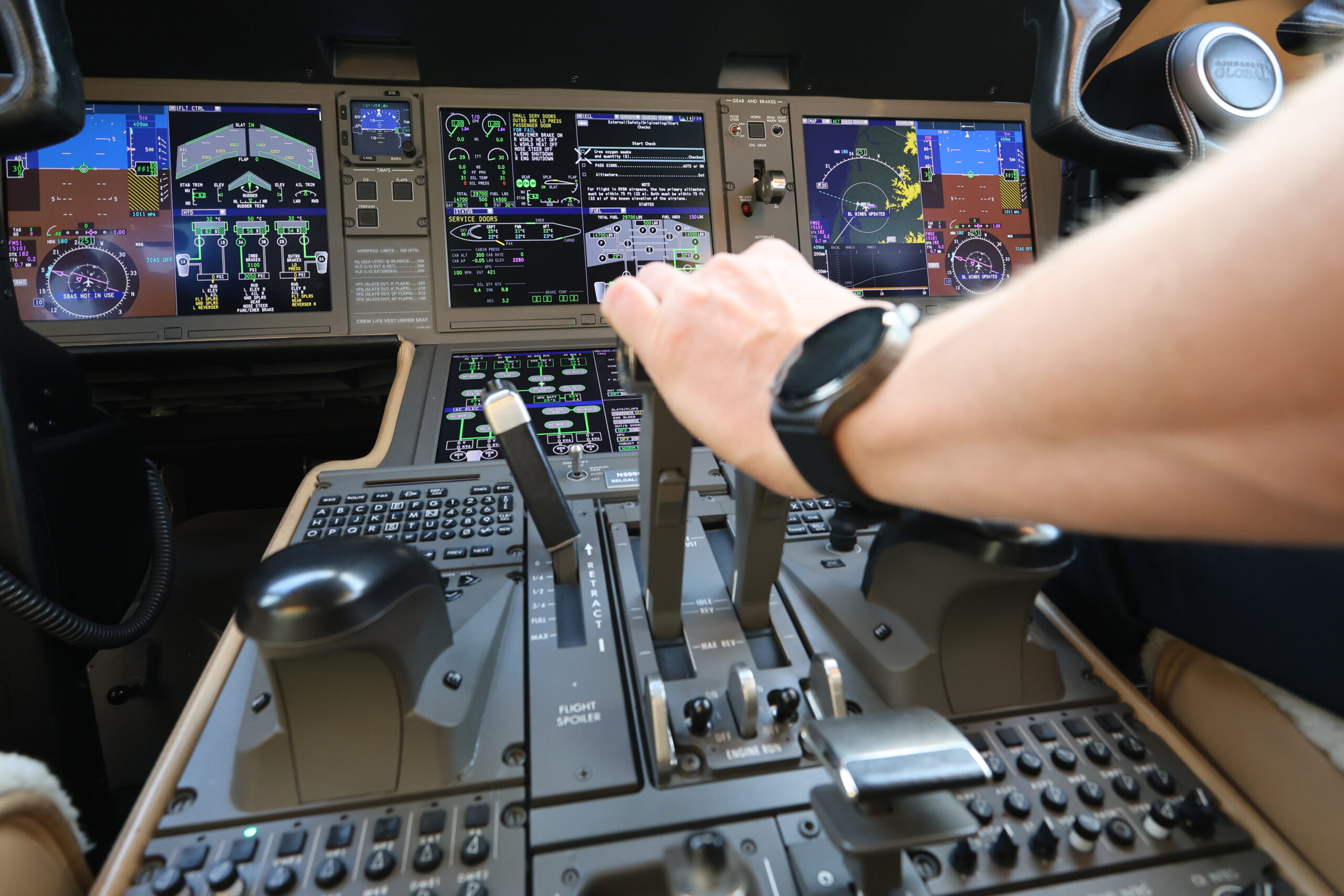
- Practical sessions on a fully motioned and certified FSTD, to implement RVSM main cockpit features.
- English
- French
Course Language
- 1 day
Duration
Other Courses
The Crew Resource Management (CRM) course equips flight crew, maintenance personnel, and operations teams with the skills and awareness needed to ensure safe and efficient operations. It emphasizes teamwork, communication, decision-making, and the optimal use of all available human and technical resources to reduce errors, manage stress, and improve overall performance.
Crew resource management
About the Course
Requirements
Basic high school education
Designed for ATPL and CPL pilots, this course equips participants with the essential knowledge and skills to operate safely and efficiently in RVSM airspace, ensuring compliance with international standards and improving pilot employability.
RVSM
About the Course
Requirements
ATPL or CPL license
Intermediate English proficiency
This course combines theoretical instruction and practical flying training to equip pilots with the skills to prevent, recognize, and recover from aircraft upsets that exceed normal flight parameters. It strengthens pilot confidence, decision-making, and safety performance during unexpected situations.
Upset recovery
About the Course
Requirements
Aviation English Level 4
Professional pilots (ATP, CPL) — initial or recurrent
This course provides aircraft maintenance professionals with the essential knowledge and technical skills needed to perform inspection, repair, and maintenance in accordance with aviation safety and regulatory standards. It focuses on understanding aircraft systems, maintenance procedures, and safety management.
Aircraft maintenance
About the Course
Requirements
Basic technical or engineering background
English proficiency sufficient for technical study
This course provides aircraft technicians, engineers, and mechanics with essential knowledge of human factors in aircraft maintenance operations. It focuses on understanding how human behavior, performance, and environment influence maintenance safety and reliability, treating these factors as conditions to be managed proactively.
Human factors for maintenance
About the Course
Requirements
Aviation English Level 4
Open to aircraft technicians, engineers, and mechanics
This course explores how people interact with systems, equipment, and environments to improve safety, performance, and efficiency. It helps aviation managers understand human behavior in operational contexts and how to foster safety-oriented management practices within their organizations.
Human factors for managers
About the Course
Requirements
Intermediate English level
Open to all aviation professionals
This program includes specialized training for aviation ground operations, focusing on safety, compliance, and handling of dangerous goods under ICAO and IATA-DGR standards.
Each course follows the Competency-Based Training and Assessment (CBTA) approach to ensure personnel are skilled, certified, and compliant with international regulations.
Ground operation
About the Course
Requirements
Basic high school education
Request a Quote or Enroll Today
Our aviation experts are here to guide you. Whether you’re interested in pilot training, ground personnel programs, or e-learning courses, we’ll provide the information you need to start your journey with AATC.
- admissions@aviairatc.com
- +1 (231) 259-8960
- BP 35105 Rue 1.791 and Rue 1.790 Intersection, Bastos, Yaoundé, Cameroon